The Rise of Lawrence Katilungu
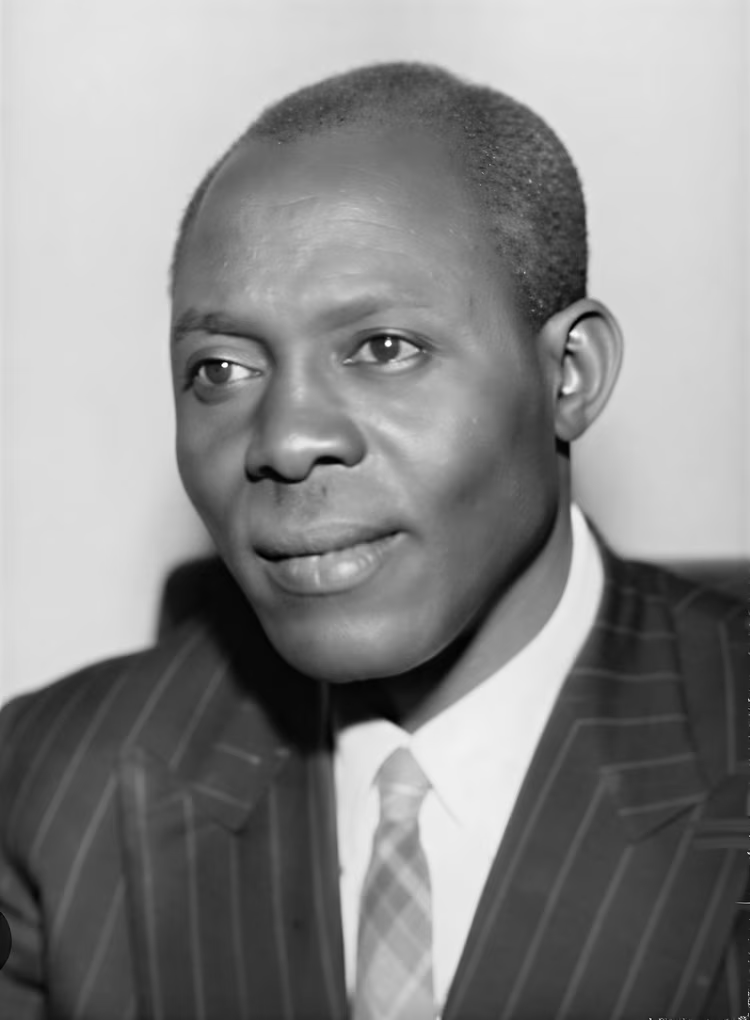
Before he became a name people argued about, Lawrence Chola Katilungu was just a boy from Luwingu in Northern Province, the grandson of a minor Bemba chief who had no obvious reason to end up at the centre of one of Northern Rhodesia's biggest political debates.
He started as a mission teacher with a life that doesn't make headlines. But in 1936, he took a job as an underground worker at the Nkana mine and was eventually promoted to recruiting clerk. That shift from classroom to copper mine changed everything.
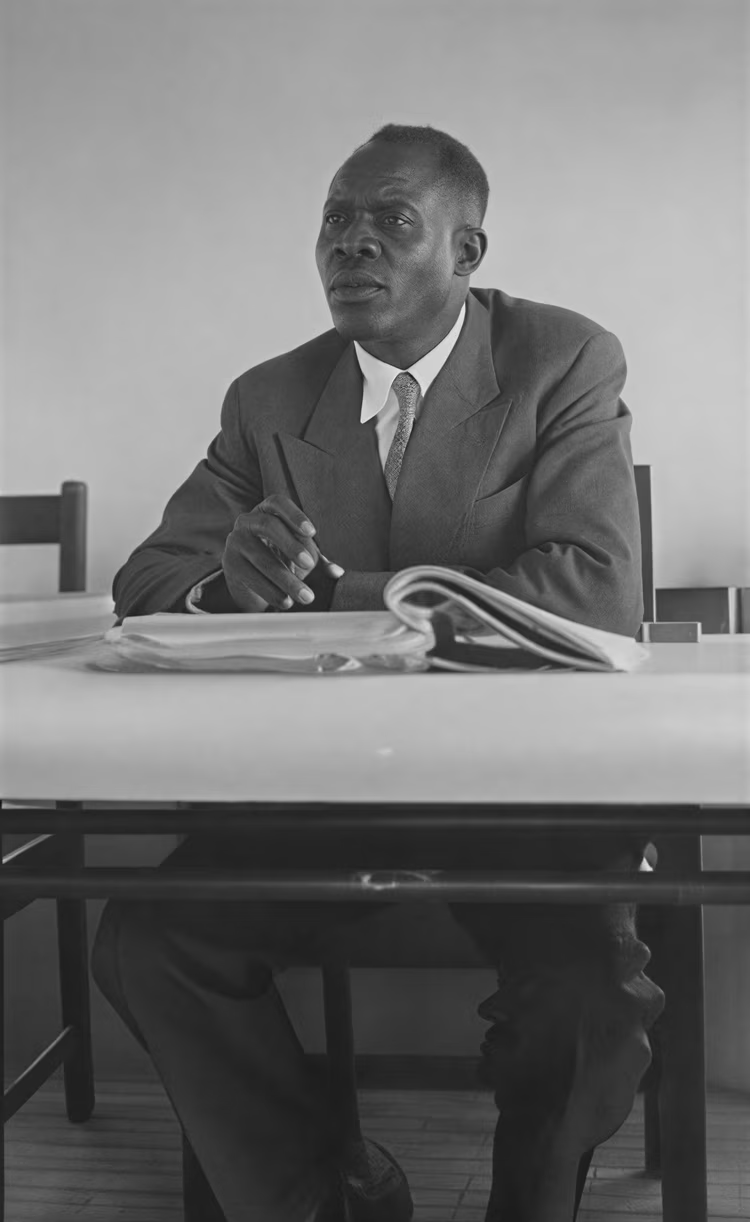
In the 1950s, life on the Copperbelt was tough for many African mineworkers. Low pay, unsafe conditions, and limited rights were part of everyday life. The primary issue during the early years was the colour bar, the practice of reserving skilled jobs for white employees. The lowest-paid white worker earned significantly more per shift than an African underground worker. Black mineworkers were progressively shut out of skilled and many semi-skilled jobs, which were effectively reserved for whites.
Katilungu had seen enough. He first came to prominence in 1940 as a leader of striking African mineworkers at Nkana. Eight years later, he was elected President of the newly formed Nkana union in February 1948. Then, in March 1949, all the African miners' unions in Northern Rhodesia amalgamated to form the African Mineworkers' Union, and Katilungu became its president.
This was not a small thing. He was now the most powerful African labour voice in the country.
In 1952, he led a successful strike to win a wage increase of a half-crown per day for African workers. It sounds modest now, but for men working underground in dangerous conditions for a fraction of what their white counterparts earned, it was tangible proof that someone was fighting for them. He was also made president of the Northern Rhodesia Trade Union Congress in 1952, giving him influence across the broader labour movement, not just the mines.
A Voice for Mineworkers’ Rights
He helped organise mineworkers and pushed for better wages and fair treatment. For many people, this made him a hero. He was someone who stood up for ordinary workers and tried to improve their lives.
But at the same time, the country, then called Northern Rhodesia, was moving towards independence. The United National Independence Party (UNIP), led by Kenneth Kaunda, was focused on ending colonial rule. Their goal was to unite people behind one main cause: freedom.
Labour vs Liberation
This is where the tension came in.
In 1953, when the British imposed the Federation of Rhodesia and Nyasaland, a move that bundled Northern Rhodesia together with Southern Rhodesia and Nyasaland under a structure most Africans deeply opposed. Katilungu did not call his members out on strike to protest it. A delegation had gone to England the previous year, including Katilungu himself, to try to persuade the British government not to impose the federation. That effort failed. But when the moment came to shut down the mines in protest, he held back. His rejection of political strike action in 1953 was probably not supported by the majority of his members.
Katilungu focused mostly on workers' issues. He worked through negotiations and tried to bring change step by step. UNIP, on the other hand, wanted faster political change. Some of its leaders worried that focusing too much on labour issues might take attention away from the bigger fight for independence.
Criticism and Controversy Around Katilungu’s Approach
There were also concerns about how Katilungu worked. He often negotiated with mine owners and colonial authorities. While this helped achieve some improvements, others felt it was too close to the system they were trying to change. By 1961, the United Federal Party, the pro-Federation white settler political party, was actively backing Katilungu with funds. For UNIP, that was more or less the end of the argument. A man being bankrolled by the very political force opposing African majority rule could not be trusted to lead workers towards liberation.
Things within the labour movement had been fracturing for a while. At the February 1960 NRTUC general executive meeting, radical unionists tried to oust Katilungu. The move backfired — he acted swiftly and expelled four industrial unions because they were in arrears with their fees. Those expelled unions then formed a rival body, the Reformed Trades Union Congress (RTUC), in February 1960, a body that aligned more closely with UNIP and the independence cause. The labour movement was now split.
Katilungu didn't get much longer to fight any of it. He died on 9 November 1961, aged 47. He never lived to see independence. He never saw the country he spent his adult life arguing over, which became Zambia. His legacy was left for others to define — and they did, on both sides.
By the time Zambia won its independence in 1964, African mineworkers had become some of the most highly paid black industrial workers on the entire continent. That didn't happen by accident. The union he built, the strikes he led, and the negotiations he sat through, sometimes too comfortably for some people's taste, were part of how that happened. Today, the Mineworkers' Union of Zambia's head office in Kitwe is called Katilungu House.
Saint or Sinner?
So, was he a saint or a sinner? The answer is not simple. He was a leader doing what he believed was right at a difficult time in history. It depends on where you stand. To many workers, he was a leader who spoke for them when few others did. To some nationalists, he was a complicated figure whose approach didn't fully support the urgency of independence.
What's harder to dispute is that he got results and that he made enemies because of how he got them. In a country fighting on two fronts at once (for workers' rights and for political freedom), Katilungu chose one front and stuck to it. Whether that was wisdom or a failure of nerve is a question Zambians have been sitting with for years.