The Rise of Women in Zambia’s Parliament
From the colonial Legislative Council (LEGCO) to today’s National Assembly, women have steadily carved out space in Zambia’s Parliament, challenging a system long dominated by men.
Their journey has been defined by courage, persistence and a firm belief that women belong in the highest spaces of national decision-making. When the Legislative Council was established in 1924 in Northern Rhodesia, politics was overwhelmingly dominated by men. Cultural expectations, colonial hierarchies and limited access to education kept most women far from formal power. Yet even in that restrictive environment, a few women managed to break through.
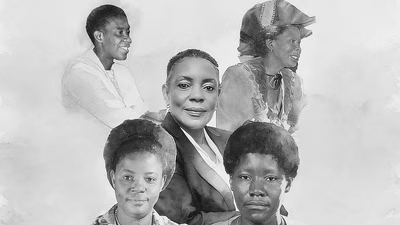
Among the earliest female legislators were Mrs Catherine Olds, Mrs Hope Hay and Ms Gwendoline Konie.
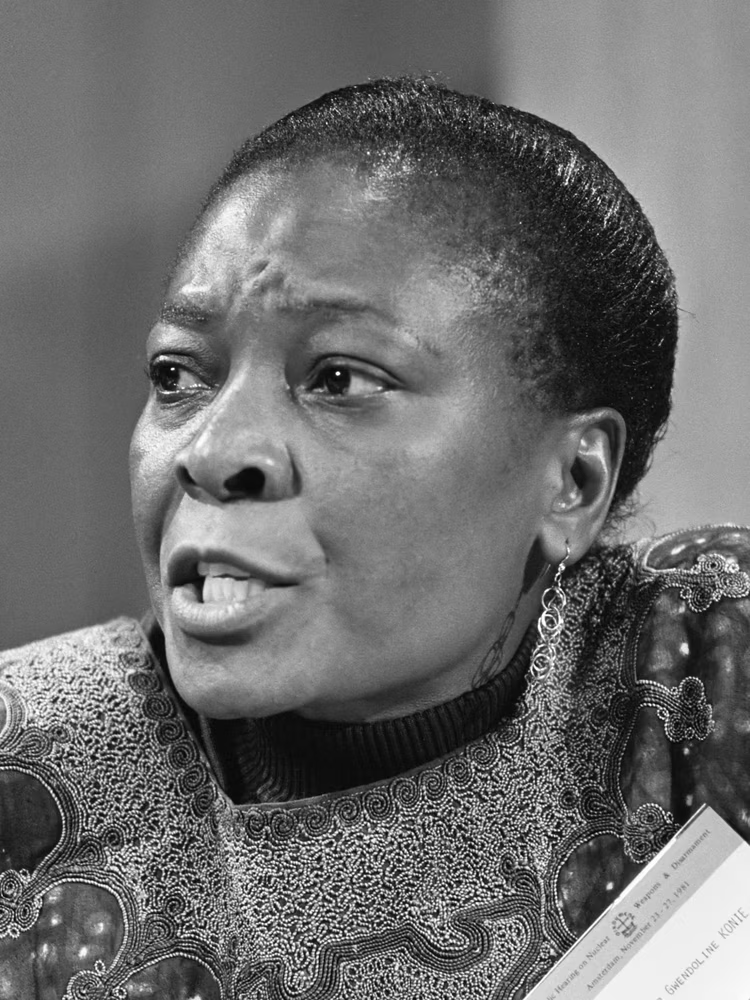
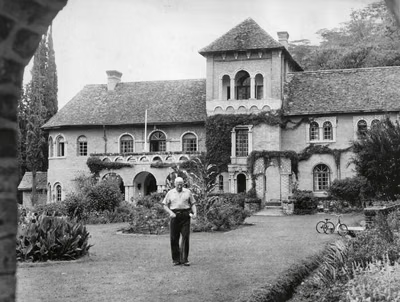
Of these, Gwendoline Konie stands out as a pioneer. She was nominated to the Legislative Council in 1962 by the last Governor of Northern Rhodesia, Sir Evelyn Hone. She later rose to become Zambia’s Ambassador to Scandinavian countries and Permanent Representative to the United Nations. Her appointment during colonial rule signalled that women, though few, were capable of shaping public policy and representing national interests at the highest level.
Women in the Independence Struggle
The independence struggle also depended heavily on women. While men were detained or forced into exile, women sustained families, mobilised resources and supported nationalist leaders.
Figures such as Mama Chikamoneka helped raise funds to bail out political detainees. Though not always formally recognised within parliamentary structures, these women laid the moral and organisational foundation for later female representation.
First Female Members of Parliament
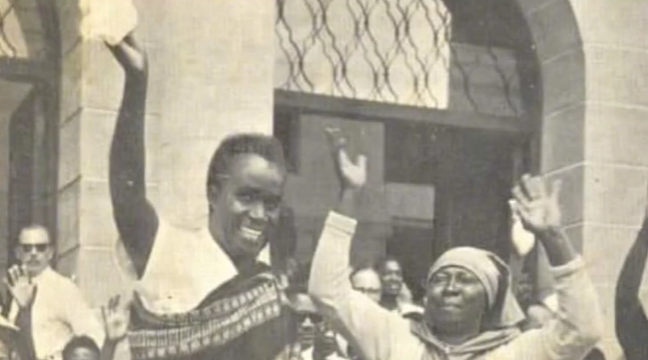
Independence in 1964 opened a new chapter. Under the leadership of Kenneth Kaunda, the new regime encouraged women to enter Parliament, either through election or nomination. Among the first cohort were Ms Nakatindi Yeta Nganga Wina, Mrs Monica Nanyangwe Chintu, Mrs Mbeba Margaret Safatiya and Ms Esther Banda.
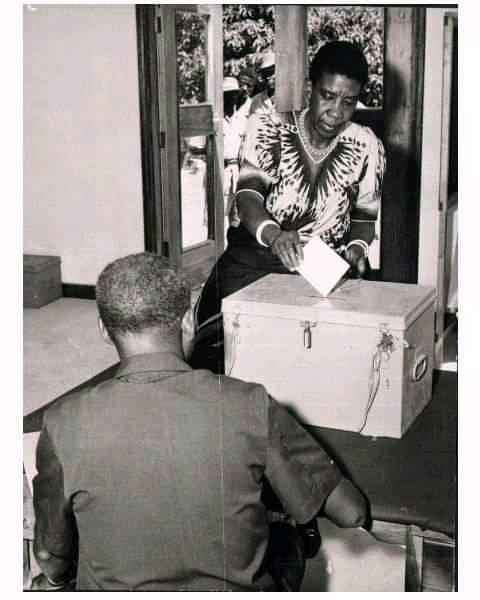
Ms Nakatindi Nganga Wina became one of the earliest female Members of Parliament after independence, serving Nalikwanda Constituency. She championed women’s education and economic empowerment, famously insisting that no country could develop without educating its women. Her advocacy challenged the deep-seated belief that leadership was a male preserve.
Mrs Monica Chintu, elected for Mbala North in 1968, defeated a male candidate and later served as Chief Whip. In that powerful role, she coordinated party business and ensured discipline within Parliament. Her leadership demonstrated that women were not confined to symbolic roles but could occupy strategic positions at the heart of legislative operations.
Another notable figure was Mrs Madeline Robertson, nominated to Parliament after initially declining to contest elections. Though she had no constituency, she immersed herself in grassroots issues and became known for research-based debates. She spoke passionately about women and children long before global campaigns elevated those issues. Her presence in Parliament quietly challenged stereotypes that questioned women’s intellectual authority in politics.
The One-Party Era
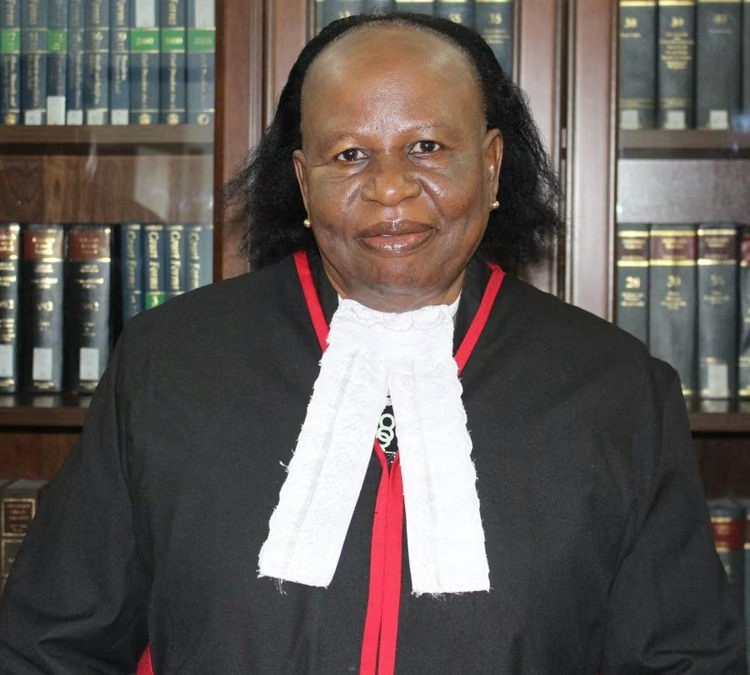
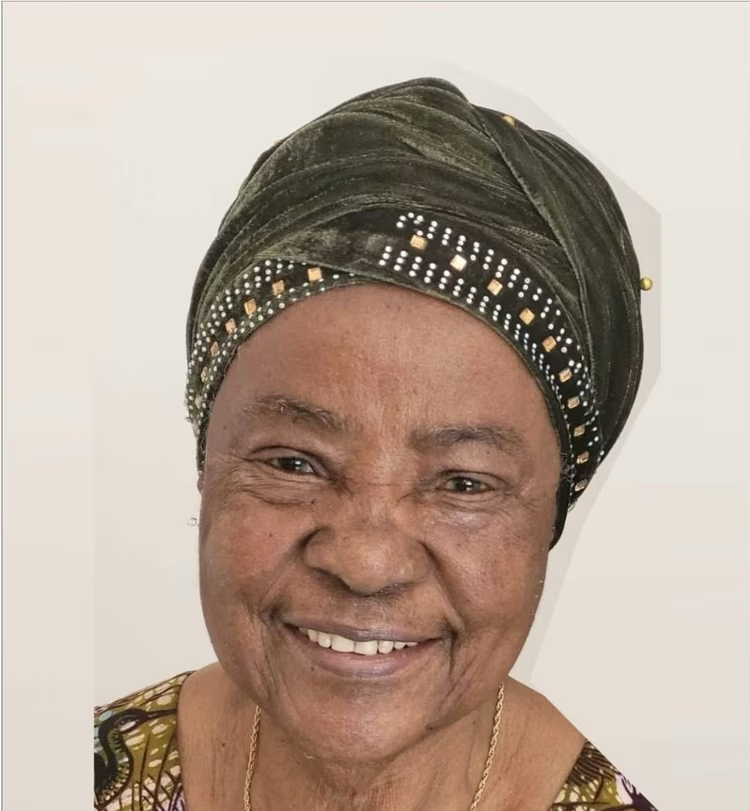
During the one-party era from 1973 to 1991, women’s numbers remained modest, but their impact deepened. Lombe Chibesakunda entered Parliament as Member for Matero and went on to become one of Zambia’s most accomplished legal minds. She later served as acting Chief Justice and president of the COMESA Court of Justice. Her rise from legislator to senior jurist reflected the expanding space for women in public life.
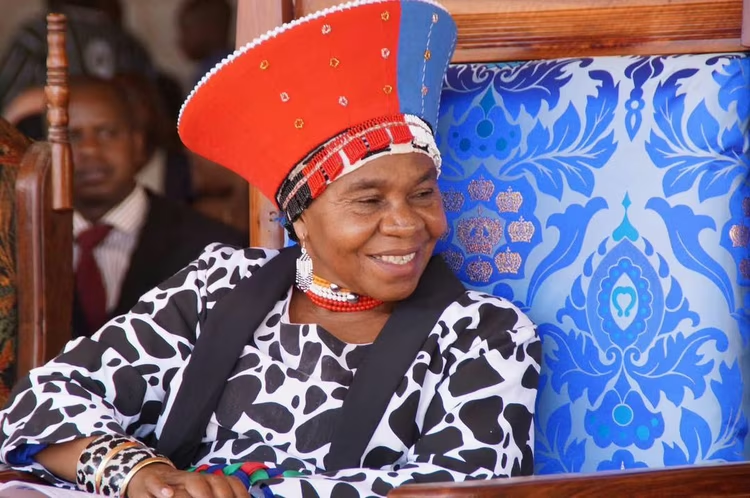
Senior Chieftainess Nkomeshya also entered Parliament in 1973, bridging traditional leadership and national politics. She strongly supported the Law of Succession Bill to protect widows from property grabbing. In doing so, she directly confronted cultural practices that disadvantaged women.
Dr Mutumba Mainga Bull, elected for Nalolo, became the first female Minister of Health. Her appointment marked a breakthrough in executive leadership and demonstrated trust in women to manage critical national portfolios.
Multiparty Democracy
The return to multiparty democracy in 1991 created fresh expectations that women’s representation would rise sharply.
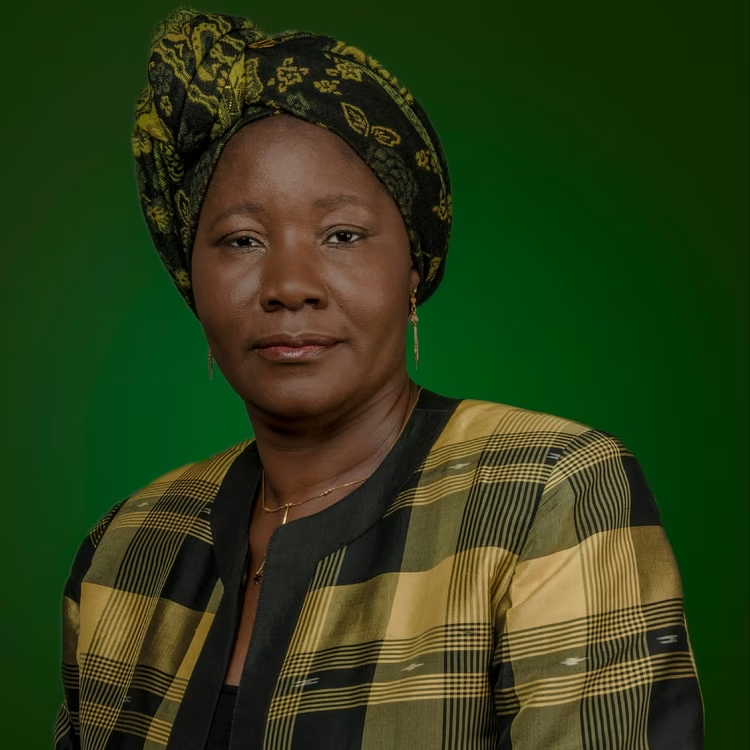
While progress has been uneven, several women have achieved historic firsts. Edith Nawakwi became Zambia’s and the Southern African region’s first female Minister of Finance. Her stewardship of the treasury shattered a powerful glass ceiling in economic governance.
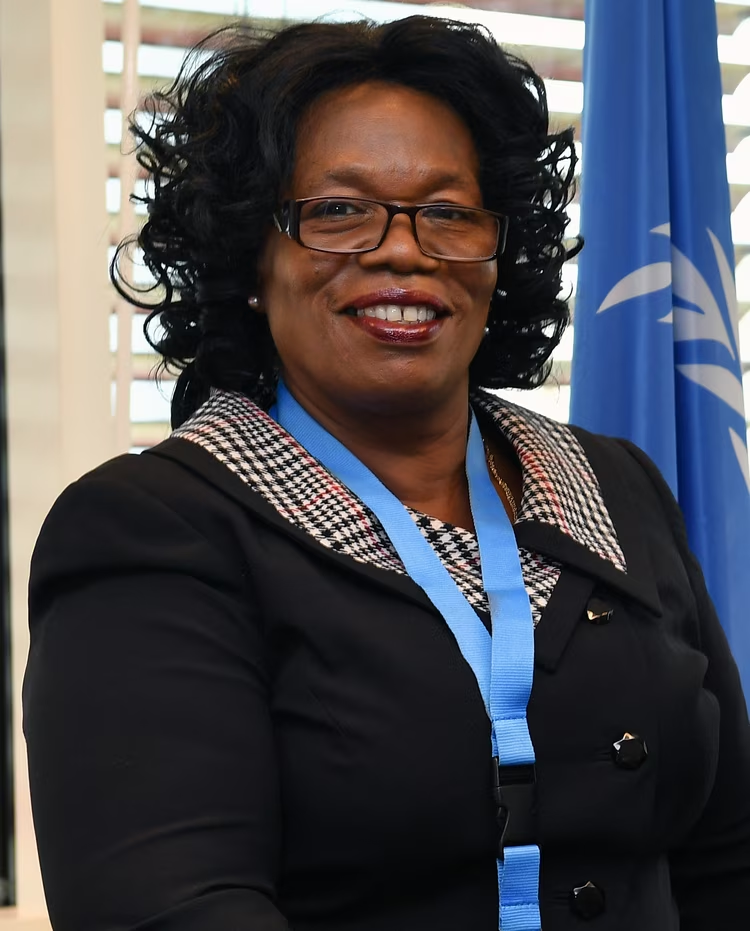
Professor Nkandu Luo, the country’s first female professor, served in multiple ministerial roles and advanced public health and gender initiatives.
Dr Inonge Mbikusita-Lewanika distinguished herself as a parliamentarian, diplomat and one of the few women to contest the presidency, broadening the horizons of political ambition for women.
Women Reaching the Highest Offices of State
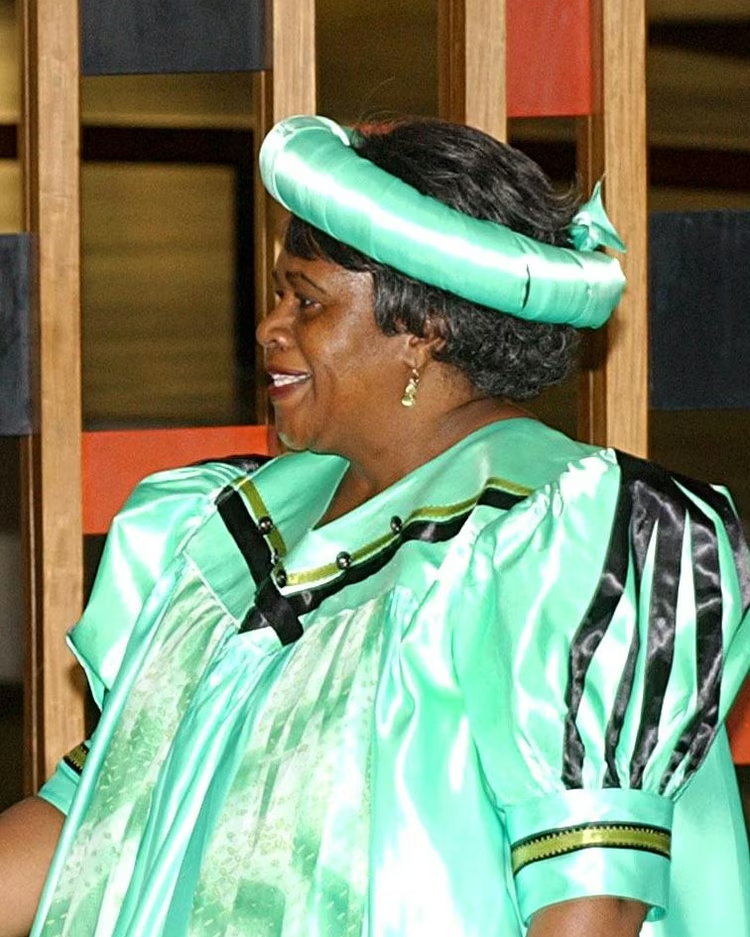
The office of the Vice President has also seen female leadership. Inonge Wina became Zambia’s first female Vice President in 2015, serving as Leader of Government Business in the House.
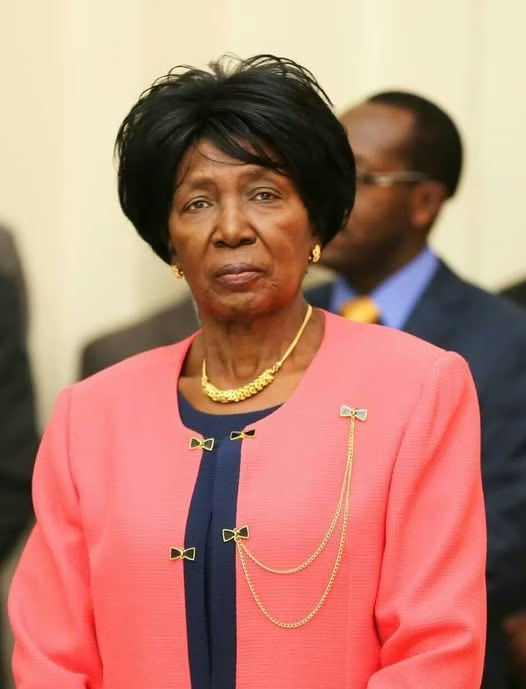
Years later, Mutale Nalumango would become the country’s second female Vice President after previously making history as the first female Deputy Speaker of the National Assembly.
In 2021, another glass ceiling fell when Nelly Mutti was elected as the first female Speaker of the National Assembly, her elevation symbolising nearly a century of incremental progress from the days when only three women sat in the colonial Legislative Council.
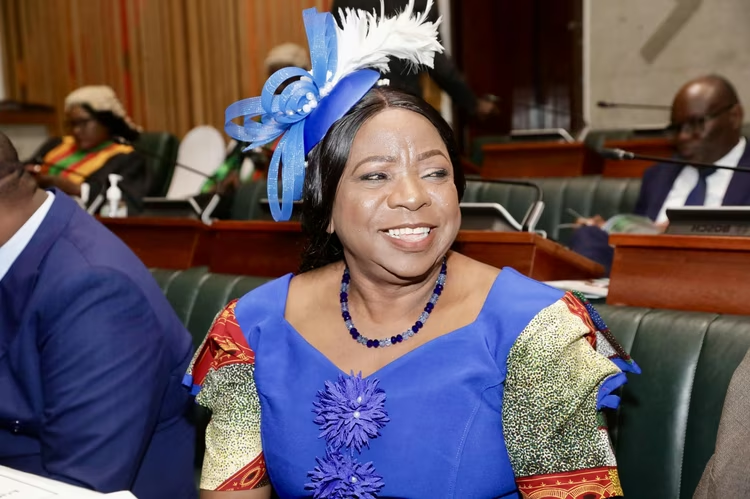
Beyond individual achievements, collective organisation has strengthened women’s influence. The Zambian Women Parliamentarians Caucus works to promote gender equality, mentor aspiring female leaders and advocate for reforms that would increase women’s representation.
Through regional and Commonwealth networks, Zambian women legislators engage with counterparts across Africa and beyond.
Challenges Facing Women in Zambian Politics
Despite these milestones, Zambia remains a patriarchal society where women often face cultural resistance, financial constraints and electoral disadvantages. Representation has grown from single digits in the early decades to stronger numbers in recent parliaments, yet parity remains elusive.
Still, the trajectory is undeniable. From Ms Konie’s nomination in 1962 to a female Speaker and Vice President in the twenty-first century, women have moved from the margins to the centre of parliamentary leadership.
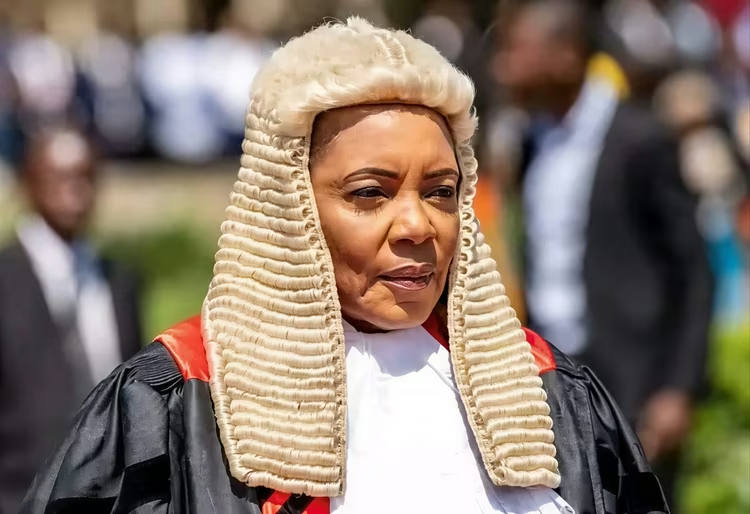
Their story is not only about numbers but about resilience in the face of scepticism, ridicule and, at times, open hostility. As Zambia continues to refine its democratic institutions, the legacy of these trailblazers stands as both inspiration and challenge.
They have proven that even within a patriarchal framework, determination and competence can open doors. The task ahead is to ensure that future generations of women enter Parliament not as exceptions, but as an equal and indispensable part of Zambia’s democratic fabric.