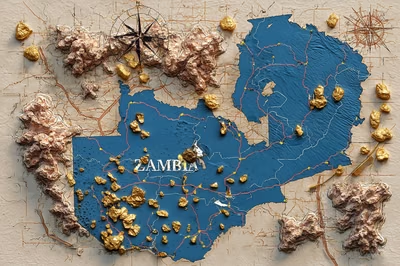
Tourism in Zambia, frequently dubbed a "sleeping giant," has long been seen as a key driver of economic growth, though it has not lived up to that promise. However, recent data suggests a sector on the move. In 2025, Zambia saw a record 2.3 million international tourists, up from 2.2 million in 2024. This represents a 4 per cent increase, fuelled by easier visa requirements and ongoing promotional efforts by the tourism authority. The significance of this achievement is heightened by the broader recovery of global travel in the post-pandemic period. It demonstrates a growing ability to compete and suggests that the tourism industry is gradually regaining its significance within Zambia's economy.
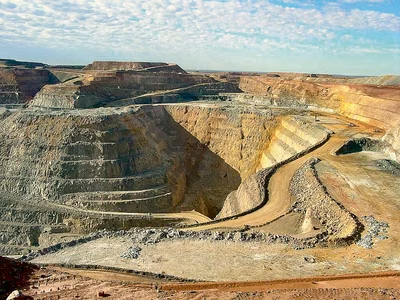
Travel and tourism today contribute an estimated 7 to 8 per cent of Zambia’s GDP, including both direct and indirect contributions. Direct contributions flow from accommodation, transport, food services, tour operations, and other recreation. Indirect contributions span supply and value chains and include, for example, fresh produce supply, lodge and hotel construction, and logistics companies that transport goods and people. In a roughly US$30 billion economy, that translates into well over US$2 billion in activity. More importantly, it represents diversification in a country where copper still dominates approximately 75 per cent of export earnings.
Employment, Inclusion and Foreign Exchange
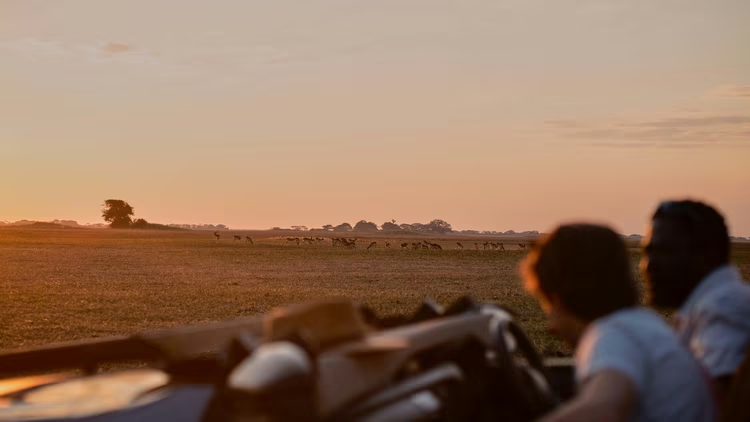
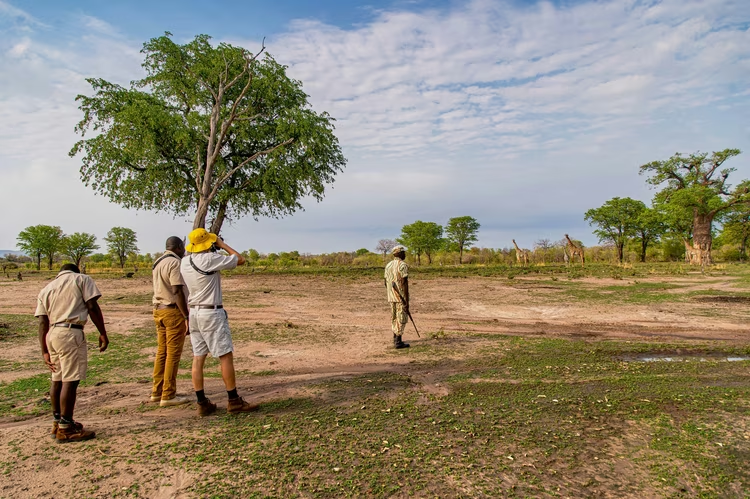
The contribution to employment further strengthens the case for tourism as a national economic pillar. The tourism business is labour-intensive and geographically dispersed. It supports tens of thousands of jobs, both directly and indirectly, especially for marginalised groups such as youth and women. Safari lodges in various national parks employ tour guides, chefs, drivers and maintenance staff. In Livingstone, tourism sustains wood and stone carvers, hospitality workers and informal traders at the border with Zimbabwe. Seasonal camps in remote areas, such as Liuwa Plain National Park, anchor economic activity where typical formal employment is limited. Unlike mining, tourism can distribute income across provinces and integrate rural communities into national output.
Foreign exchange earnings are another strategic lever. As Zambia navigates debt restructuring and macroeconomic stabilisation, sectors that generate hard foreign currency are critical. Tourism receipts reduce pressure on reserves and provide a counterbalance to fluctuations in commodity prices. While copper will remain central, tourism’s upward trajectory positions it as a credible complementary pillar rather than a peripheral industry.
Competitive Advantages and Growth Segments
The opportunity case for tourism is further strengthened by Zambia’s natural assets. Victoria Falls remains unmatched and a global destination, but it is only one of many assets. Other sites include the picturesque Kalambo Falls, the Bangweulu Wetlands in the northeast, and expansive wildlife corridors, collectively giving Zambia one of the most intact and well-preserved safari ecosystems on the continent and helping maintain a premium positioning in the safari market.
Often overlooked is the fact that, at the heart of Zambia’s proposition as a tourist destination, are its people. Visitor surveys consistently highlight the warmth and friendliness of Zambian people as one of the key reasons to visit and return, an intangible asset that can be further leveraged through education and training.
For many years, Zambia has been described as landlocked, but the term ‘land-linked’ now has credence. Surrounded by eight neighbours, including Zimbabwe, Botswana and Namibia, Zambia is positioned within a two-hour flight radius of some of the continent’s most visited attractions. Multi-destination packages linking Victoria Falls and national parks with regional circuits are already common. With strategic aviation and visa policies already in place, Zambia’s tourism sector is receiving a boost from renewed global interest.
While high-value safari tourism remains the flagship, domestic tourism is gradually strengthening as a growing middle class explores local destinations. Meetings, Incentives, Conferences, and Exhibitions (MICE) tourism is growing in Lusaka and Livingstone, supported by improved conference facilities such as the refurbished Mulungushi International Conference Centre and international hotel brands. Cultural heritage and community-based tourism initiatives are beginning to link conservation with livelihoods, ensuring that local communities participate more directly in tourism value chains and contribute to the fiscus.
Structural Constraints and the Path Forward
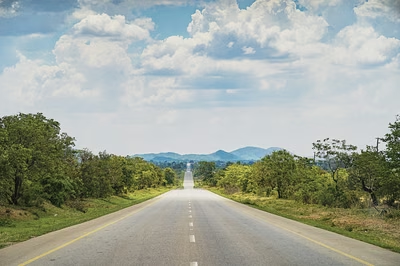
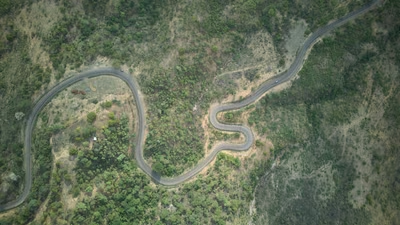
However, these positive developments are not without their challenges, namely, infrastructure gaps, particularly road access to certain parks and increased operating costs. Energy constraints, exacerbated by drought and hydroelectric power shortages, have increased operational costs for lodges reliant on backup power systems. These realities affect competitiveness, yet they also highlight where policy attention must focus.
Encouragingly, recent reforms are demonstrating momentum. Initiatives such as expanded visa-free access have reduced entry barriers and contributed to the record arrivals observed in 2025. Continued marketing efforts have also strengthened Zambia’s visibility in international markets. Private-sector investment in lodges, hospitality infrastructure, and aviation growth signals confidence in long-term growth. The sector’s recovery since the pandemic reflects meaningful resilience and growing investor confidence.
The seasonal nature of Zambia’s tourism sector continues to affect revenue generation, with peak dry seasons outperforming rainy months that limit access to several national parks. To address this, diversifying into cultural events and strengthening regional conferencing (MICE) can help reduce volatility. Skills development is equally critical, and sustained investment in training to drive product innovation, as well as access to financing for small operators, can further unlock entrepreneurial energy.
Zambia does not need tourism to replace mining; instead, it needs tourism to stand confidently alongside it. Zambia already has a strong base to build on, from its unmatched natural assets and strategic geographic position to a hospitable population whose potential can be further strengthened through skills development and entrepreneurial acumen. With supportive policies and renewed investment interest, the sector is poised to evolve into a promising contributor to GDP and a dependable engine for diversifying Zambia’s growth strategy.