Who Was Kenneth Kaunda Beyond Politics?
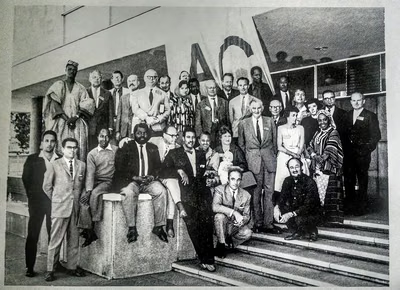
Who was Kenneth Kaunda beyond the halls of State House? Long before “multihyphenate” became a buzzword, Kaunda was already living it as a writer, musician, and philosopher. Through his creative work, he told not only the story of his life but also that of a nation in formation. His literary works reveal his ideas on culture, family, and humanity, offering insight into the man behind the presidency.
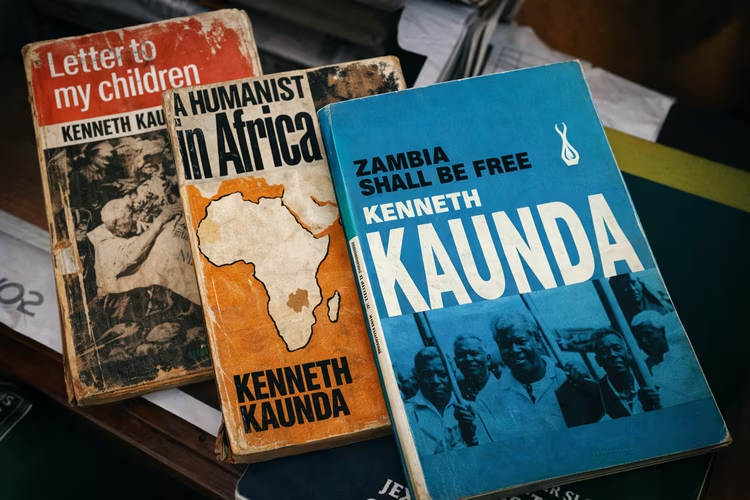
Zambia Shall Be Free (1962)
Published two years before independence, the book details Kaunda's early life and experiences of racial discrimination and injustice that fuelled his desire for a free Zambia. The book also details the lengths to which natives had to go in the struggle for emancipation.
The book has received mixed reviews. Some critics have called the narrative “factually unreliable”, while others argue that it offers valuable insight into Kaunda’s political development and highlights the tension between his involvement in violence and his justification of it in the fight for independence.
Ultimately, Zambia Shall Be Free is less about factual accuracy and more about the moral weight of lived experience. It reminds us that leadership is seldom easy, especially when ideals clash with reality. When pacifism falters, and violence tempts, and every choice carries the weight of the fate of a nation. This book shows that with great power comes great responsibility.
Letter to My Children (1973)
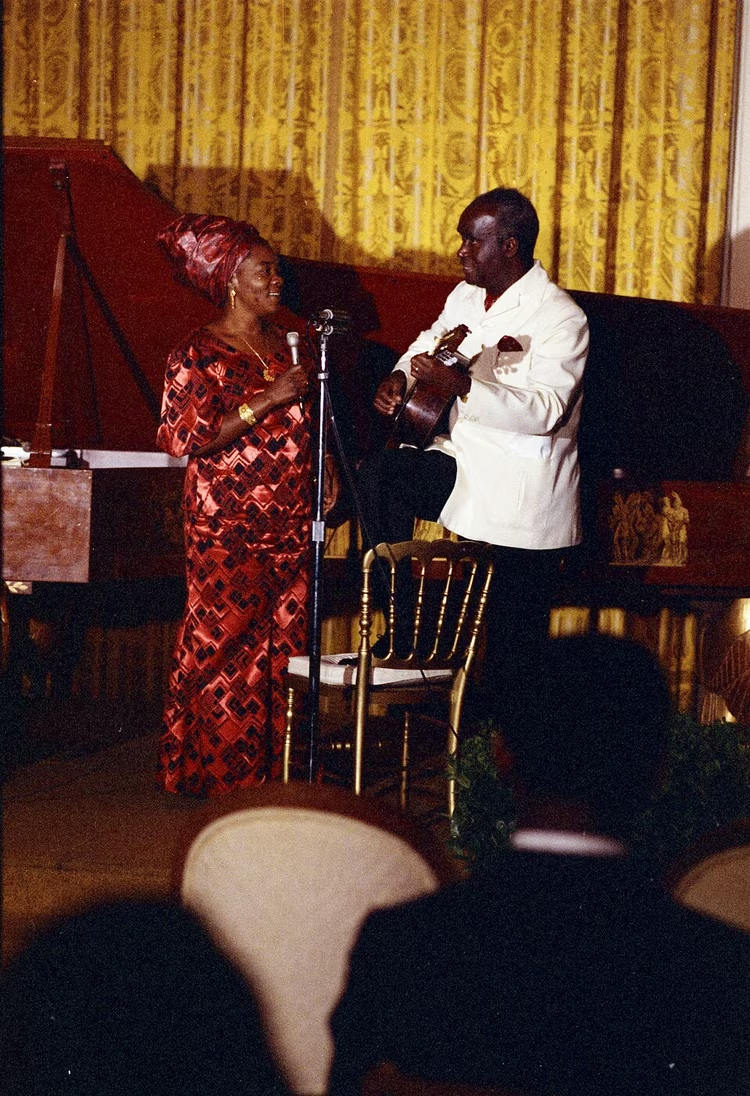
The book was written during Kenneth Kaunda's presidency. It covers several important topics, such as faith, education, humanism, music, power, freedom, justice, law, thoughts on immortality, and self-fulfilment. It was dedicated to his children and the youth of Zambia. In the book, he provides an account of his leadership experiences, the reasoning behind his decisions, and his vision for Zambia. In the book, he also highlights the beauty of music and his love for the arts.
This book remains relevant for today’s youth in Zambia and Africa at large, with wise counsel and timeless advice on faith, leadership, and how best to navigate life in a world that is fast-paced.
A Humanist in Africa (1966)
This collection of letters from Kenneth Kaunda to his friend Colin M. Morris outlines “Zambian Humanism”, a philosophy centred on human dignity, non-violence, and African communal values. Written during the early years of his presidency, it reflects on the challenges of building a new nation and the need for unity in a post-colonial era.
Critics note that although the ideologies stated in the book were strong, execution often fell short. Although the practical application of humanism was not executed perfectly, the “One Zambia, One Nation” motto remains relevant and lasting to this day.
Kaunda on Violence (1980)
For Kenneth Kaunda, non-violence was a political strategy. During the break-up of the Federation and Zambia’s path to independence, he largely practised what he preached, despite pressure from UNIP hardliners and provocation from colonial forces. He took pride in the fact that Zambia achieved independence with minimal bloodshed.
In the book, Kaunda wrestles with his pacifist ideologies and the harsh reality of the liberation struggles in Southern Africa, particularly in Rhodesia/Zimbabwe, Namibia, and South Africa. While he personally loathed violence, the book explains why he felt compelled to support armed liberation movements. He argues that when all peaceful avenues are closed by oppressive regimes like those of Apartheid, the “lesser evil” may be to support a just war to prevent even greater systemic violence.
The book serves as a primary source for understanding why Zambia became a “frontline state,” hosting guerrilla bases despite the economic and military risks involved.
The Riddle of Violence (1981)
As a young nationalist, Kenneth Kaunda was introduced to Gandhian non-violence by an Indian shopkeeper in Lusaka. During the independence struggle, he largely followed these principles. However, as a political leader, he came to recognise that ideals are not always easily translated into action.
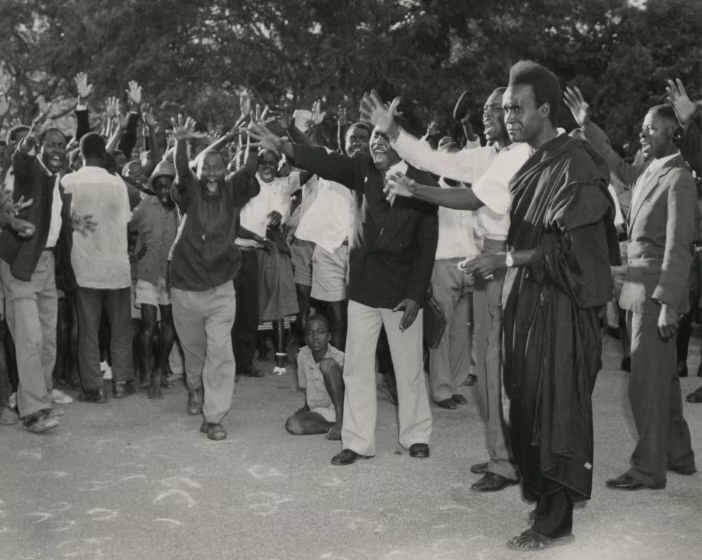
Eventually, he became a prime supporter of Zimbabwe guerrilla movements (armed struggle fought by African nationalist movements against the white minority government of Rhodesia) and allowed guerrillas sanctuary on Zambian territory.
This book was addressed mainly to British pacifists and clergymen and explains the reasons for these actions. It gives an account of events in southern Africa as seen from the perspective of a leader who belongs to the West’s Christian tradition of ethics but who is racially and culturally African.
Why Kenneth Kaunda’s Writings Still Matter Today
Kenneth Kaunda’s literary works capture the contradictions of a leader who deeply valued peace yet faced the realities of political compromise. They reflect a man who believed that art, ethics, and humanity were central to nation-building.
Although some of his works may be dated, they still offer relevant lessons for people living in today’s age on balancing ideals with practicality. They are also a great read for young aspiring leaders.