Every Zambian driver knows the feeling. You spot a checkpoint ahead and suddenly start mentally checking your paperwork. Is the insurance still valid? Did the road tax expire? Is your licence up to date? In a matter of seconds, confidence turns into uncertainty. The good news is that most traffic fines are avoidable if you know what to check before you hit the road.
Check Your Vehicle Before Every Journey
Before you even unlock the door, do the Walk-Around-Check. Walk around the vehicle slowly and deliberately. Check the tyres, if anything is leaking underneath, if the lights look damaged, then look at the windscreen, specifically, check the Road Tax/Inspection sticker and the Third-Party Insurance disc. Look carefully at the expiry dates. Is the print still clear and black? Or is it that faded orange colour that practically screams: “Pull me over”?
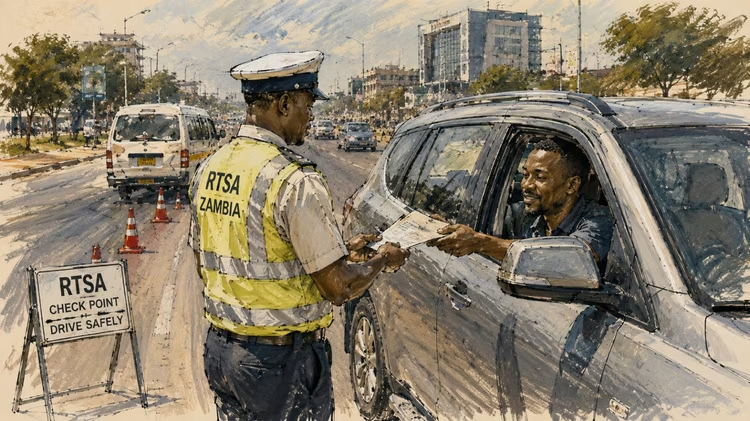
Drivers can experience delays or enforcement issues when discs become damaged or difficult to read. If an officer cannot clearly see the expiry date, it may result in additional checks and unnecessary delays. Sun damage and age can fade the ink badly over time, especially on vehicles parked outdoors every day. If the disc looks tired, replace it before someone else tells you to. That sixty-second walk around can save you hours of frustration later. Your documents are your first line of defence during any roadside inspection. Without them, every traffic stop becomes complicated. Most drivers only glance at the discs when renewing them. That is a mistake.
Take time to know exactly where the expiry dates are printed on both the COV/inspection sticker and the insurance disc. Do not assume. Look properly. If you borrow vehicles regularly, check every single time. Never assume the owner handled everything correctly. Some drivers discover their insurance has expired only after they have already been stopped. Others discover the inspection certificate was never renewed at all. And remember: faded or damaged discs can become a problem even if the dates are technically still valid. Keep the windscreen area clean and visible. This sounds obvious until it happens to you. Check the expiry date on your driver’s license regularly. Many people confidently hand over a license at a checkpoint only to realise it expired weeks earlier. Sometimes months earlier.
Defensive Driving Can Save More Than Money
The officer will not be impressed by: “I forgot.” Put a reminder in your phone weeks before expiry. Your future self will thank you. Drive like everyone else is crazy. Not aggressively. Not fearfully. Predictively. Assume the taxi ahead may stop suddenly without indicating. Assume the minibus on your left may cross three lanes at once. And sometimes it does. Assume the truck ahead will swerve violently to avoid a pothole. Which it also might. Assume the motorbike behind you is closer than your mirrors suggest.
Defensive driving is not paranoia. It is survival. The safest drivers are not necessarily the fastest or the trickiest on the wheel. They are the ones constantly anticipating danger before it happens, constantly looking left or right. A good driver is not only responsible for their own decisions. They are also constantly compensating for other people’s bad ones, and that’s why it needs your full attention as well. Here is something many drivers do not know: Hand signals are commonly taught as an emergency way of communicating with other road users if indicators fail unexpectedly. So use them when you can and if you need them. If your indicators fail unexpectedly, your right arm out the window can still communicate your intentions to other road users. Straight arm out: turning right. Arm bent upward: turning left. Arm bent downward: slowing or stopping.
Of course, this is not an excuse to drive around indefinitely with broken indicators. Delaying repairs can end up costing far more than fixing the problem properly.
But in an emergency, hand signals are far better than changing direction silently and hoping everybody reads your mind. How many times have you seen a road user not use their indicators, let alone turn on their lights, and it completely pissed you off? So many times, hasn’t it? Set a better example because poor signalling remains one of the simplest ways accidents happen. Speed traps are not hidden because officers are bored. They exist because speed kills. Most speeding fines happen because drivers stop paying attention in familiar areas. That straight road you use daily? Has a speed limit. That downhill section where the car “just rolls”? Still has a speed limit, and it is important as a driver to respect the limit.
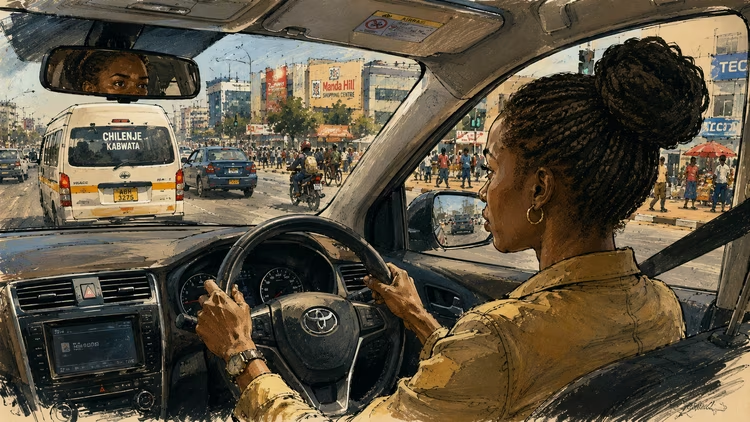
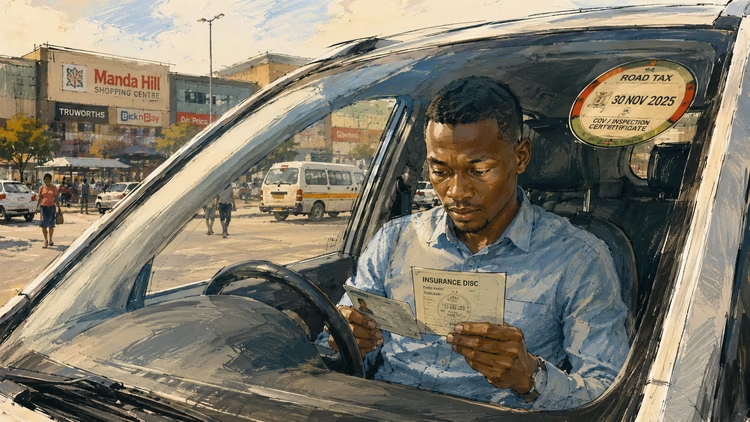
Watch for school zones. Watch for sudden changes. And remember that speeding slightly still counts as speeding. Many drivers argue passionately over five or ten kilometres per hour. If you are stopped, stay calm. Lower the window. Be respectful. Answer questions clearly. Do not start the interaction aggressively. And absolutely do not say:
“Do you know me?”
“Do you know who I am?”
“You can’t stop me.”
Oh boy! Those really get RTSA officers boiling. Do yourself a favour and avoid turning a routine stop into an expensive mistake.
Those sentences have never improved any situation in human history. If you disagree with the officer, remain calm and follow the proper legal process afterwards. The roadside is not a courtroom. Your goal during a stop is not to behave as if you know everything. It is to resolve the interaction safely and professionally. At the end of the day, road safety is truly bigger than paperwork and fines. The inspection sticker matters because unsafe vehicles cause accidents that can turn fatal. Insurance matters because accidents happen. Indicators matter because communication prevents collisions.
Speed limits matter because physics does not negotiate. So yes, avoid the fine. Avoid the technicalities. Stay alert. But remember the real mantra: The goal is not to win an argument with a traffic officer. The goal is to drive home calmly and safely to your family.